Turning a deep-tech GPU cloud startup into an operating business
A cloud computing provider had its own server-cooling technology but no real business around it. The team worked mostly on engineering, the company carried external debt, and revenue never turned into profit.
Within the first year of our involvement the company turned profitable and revenue was climbing. The growth held in the years that followed.
Context
The core know-how worked. In every other respect this was a typical tech start-up: a strong engineering team running mostly on belief in the idea, and a business that had grown up as a side effect of the technology rather than something built on purpose — no clear growth strategy, and revenue that never converted to profit. The company also carried external debt, and a sizable share of its cash went to servicing it.
A new majority investor acquired the company, funded its recapitalization, and put money into development. That set up the conditions for a rebuild — but capital alone does not build a business.
The technology was there. The business around it was not.
Approach
The work was done from inside the company. Mark Turovetskiy took the role of CBDO, reporting directly to the new shareholder, and owned strategy, sales, processes, and new lines of business.
No new technology had to be invented — it already existed. What was missing was the business around it: strategy, teams, processes, sales, and financing, tied into one working model.
The whole leadership team drove the rebuild — the CTO, CBDO, and the new shareholder.
The engineering team stayed intact — no one was let go or pushed aside. The talent was never the problem; what was missing was business direction, not engineering ability. The rebuild ran with the same people who had built the technology — by pointing their work in the right direction and amplifying that impact by many times over.
Our work
We built the strategy from scratch and turned it into tactics: exact steps, targets, and regular reporting to owners and investors.
Some of the key changes and decisions:
We stood up a sales process — and changed the logic underneath it.
Until then the company had sold the market on its technology and its know-how. But a customer doesn't choose a technology; they choose price, convenience, available resources, and service quality.
So we rebuilt the offer around what the customer needs, not around the technology that set the company apart.
We built a public brand where there had been none: positioning, identity, marketing websites. The company started raising its profile — speaking publicly and showing up at industry events.
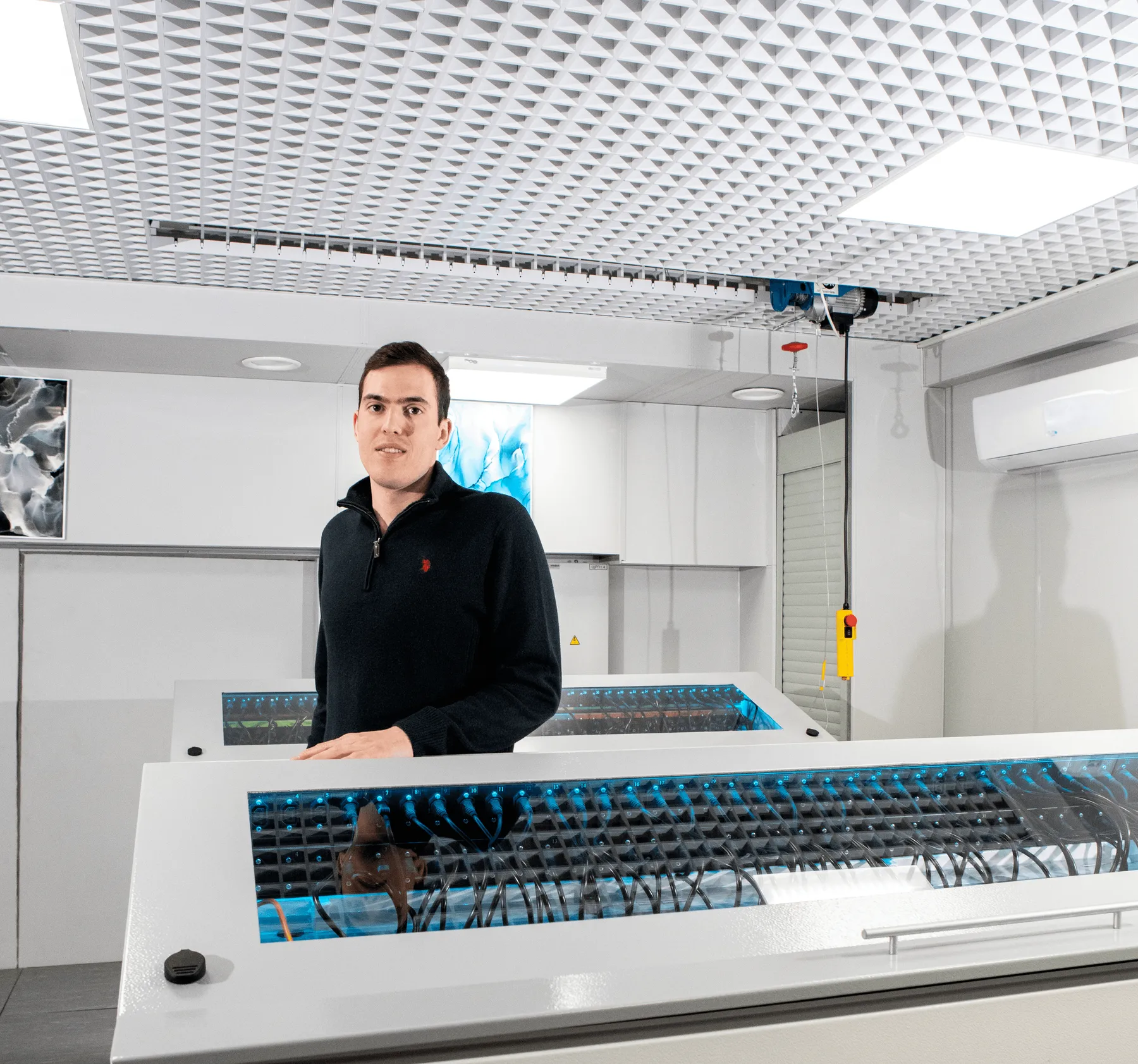
We pushed the product further from renting hardware toward services that sit on top of the infrastructure. The company added ready-to-run images — including ones with preinstalled AI tools — along with S3 object storage, a marketplace of ready configurations, and a catalog of models accessible by API.
The core offering moved decisively to IaaS — infrastructure as a service.
The result
In the first year annual revenue doubled, to about $1.3 million, and the company crossed into profit. In the second year revenue grew by a further 1.5×, and it didn't stop there.
Two things produced that growth: the capital the new investor put in, and the operational rebuild that turned a startup into a business. One without the other almost never works.
The company stopped being an "innovative non-profit startup" and became a business with a stable operational model. The technology stayed the same — what changed was everything around it. The business continued working and evolving after the active phase of the engagement, as its growth now rests on processes, not on manual cash-flow fixes.
Currently the company is named among the leading GPU cloud providers in the region, as rated by independent industry rankings.