An onboard telemetry system for freight trailers
To a small carrier, a trailer is little more than a dot on a map. Nobody is watching the cargo, the doors, or what happens at a stop.
In two months, LAB412 took a European startup's idea from design to working prototypes — the whole system, end to end. The startup now uses them to pilot with early fleet customers and raise money.
Context
A semi-trailer spends long stretches on its own, away from the truck: it sits in lots, it runs through dead zones where the connection drops, and things happen at night, in transit, with no witnesses. The state of the cargo and the doors is never recorded, so incidents go uncaptured.
The trailer is a blind spot: on the map, a moving dot — but what happens to the cargo, the doors, and the load at a stop goes unseen.
A European startup set out to close that gap. It had the product idea and deep market experience, but no hardware or software background. The founder came to LAB412 for the engineering part: design and build the device and the platform, then bring them to working prototypes.
Approach
We built the system to give the end device as much autonomy as possible. A trailer's connection isn't always there, so the device cannot depend entirely on the cloud to do its job.
The onboard unit does as much as it can on its own: reads the sensors, records the event, stores the data locally. The cloud handles notifications, dispatching, history, and the interface.
After discussing the terms we decided to partner with the startup: LAB412 is responsible for the engineering and holds a stake in the company.
Our work
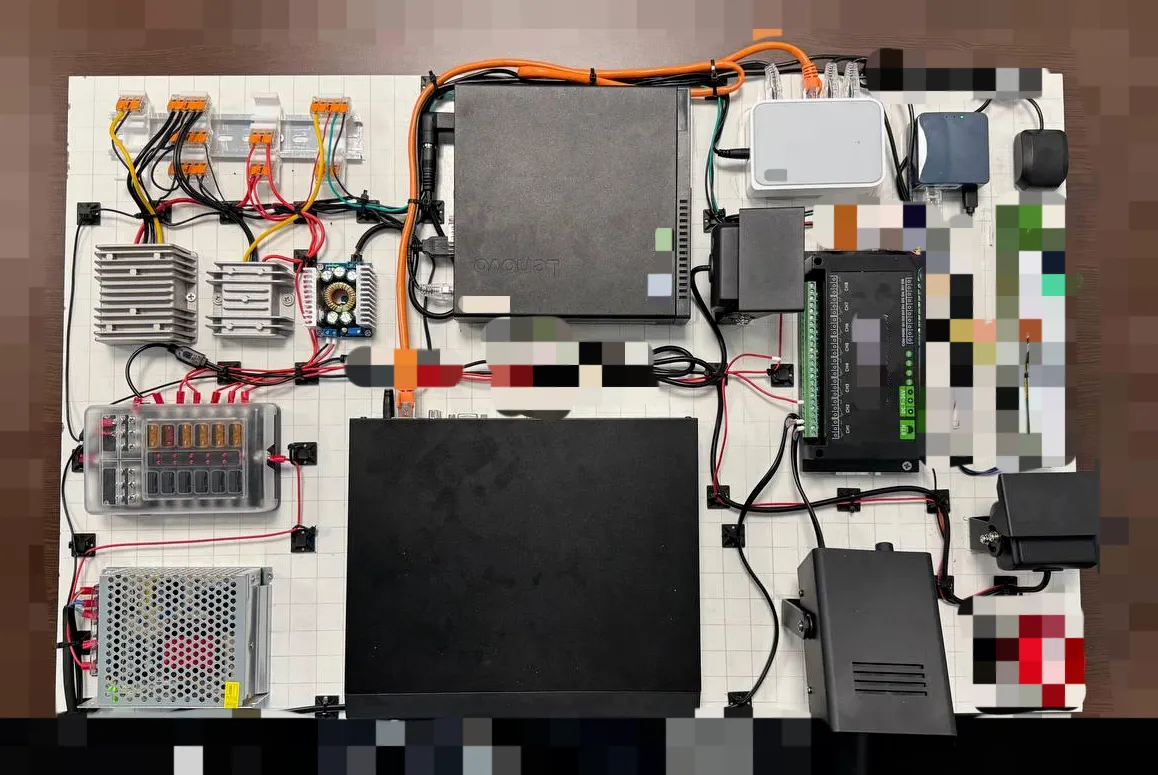
The onboard unit — a working prototype — reads its sensors and cameras, tracks location, motion, impacts, and door openings, records video, and captures the scene when needed. With no connection to the cloud, it still logs the event on the spot and sends the notification the moment the connection comes back on.
When the connection is up, video from the scene streams to the dispatcher's browser in real time, and every event lands on a single page: the whole fleet is visible from one screen.
For the data exchange between device and server we went with MQTT over mTLS: the channel is encrypted, and each device carries its own certificate. Connectivity runs over a secure mesh overlay with full tenant isolation.
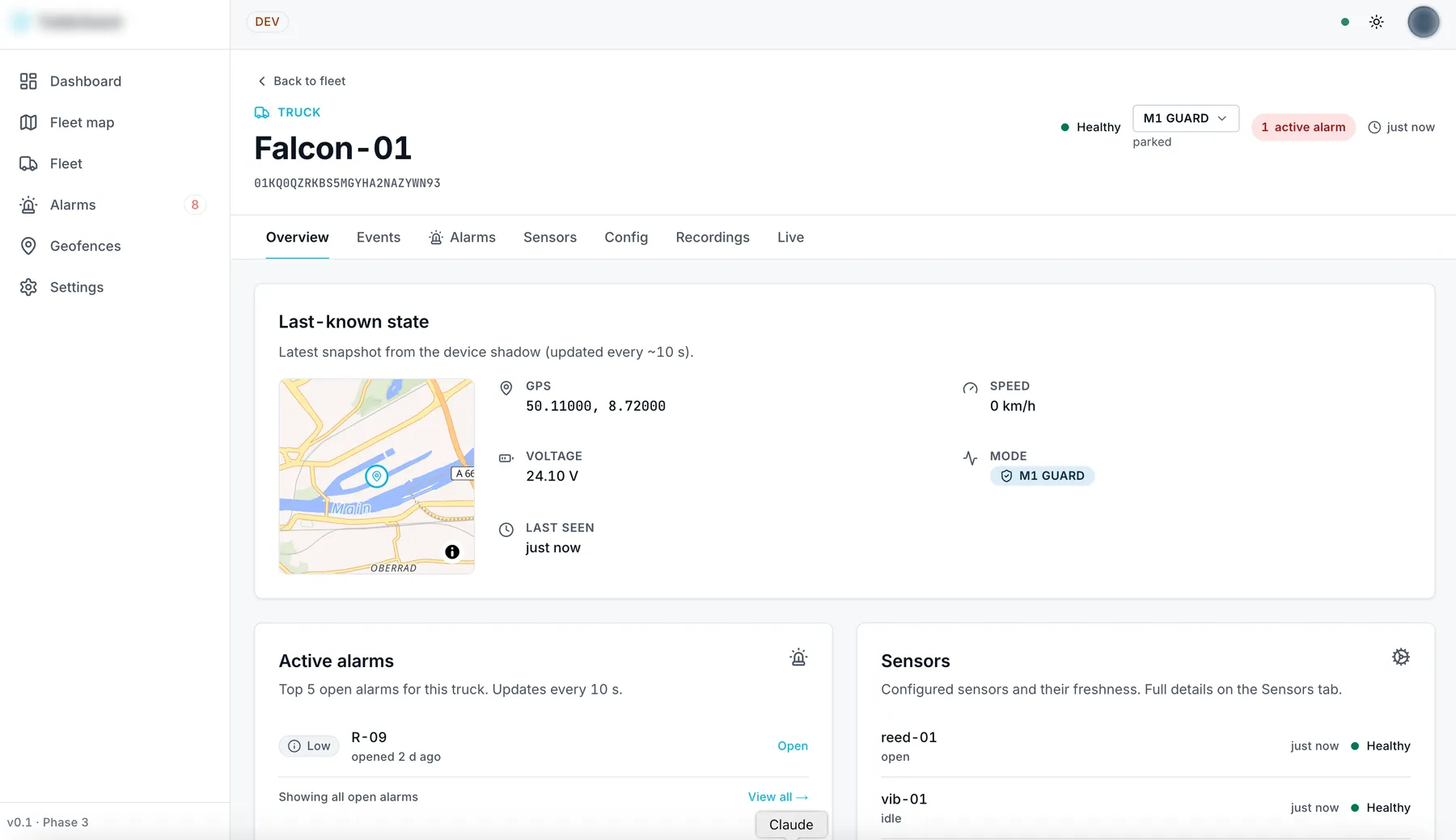
From the start we designed the platform in two forms — on-premises and SaaS options. The SaaS version works with dozens of connected fleets and hundreds of vehicles, each with its own custom set of sensors, access, and data rules. The team also designed and implemented the logic for semi-automatic onboarding of new devices (as an option for self-installation), as well as multiple ways for remote configuration and support.
To debug the system before going into the field, and to load-test it, we built a "virtual fleet" of dozens of trucks: they run in containers emulating full onboard units — cameras, sensors, geolocation and all. The company currently tests incident scenarios on them, rehearses responses, and gives demos.
The result
In two months the team built every part of it: the physical onboard unit and its autonomous logic, the cloud, the dispatcher's console in the browser, and the virtual fleet it was tested against.
The startup now uses the prototypes to demo the system to investors and to pilot with fleet operators.